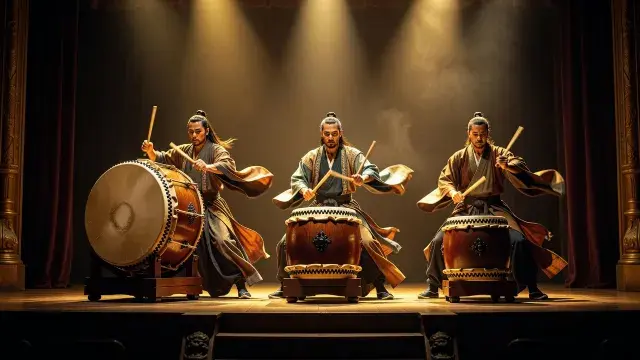
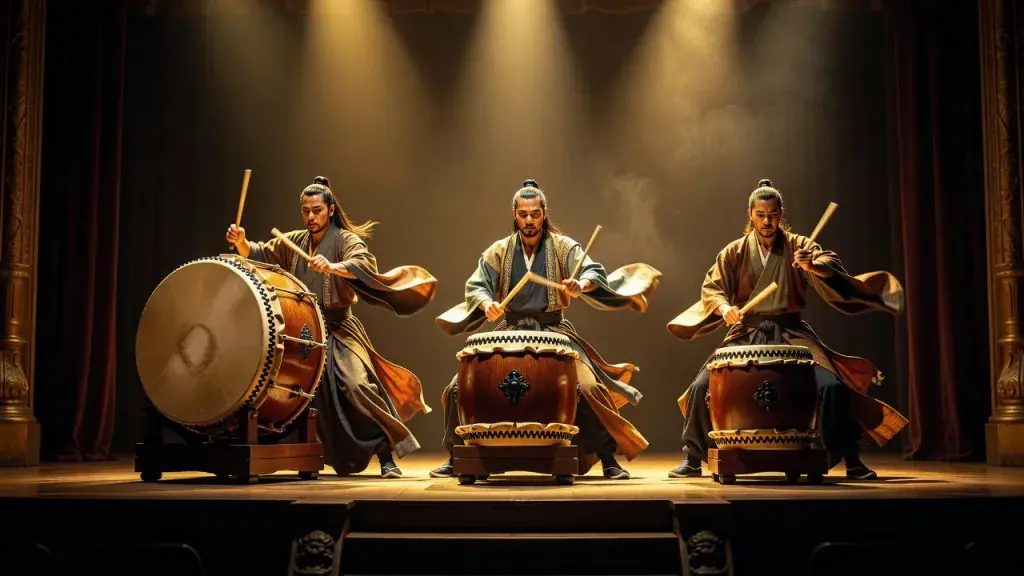
A single drum can command a room, but three drums played in coordinated sequence can command an entire arena. There's a specific acoustic phenomenon at work when percussion multiplies beyond one instrument: overlapping harmonics, staggered attack timing, and layered low-frequency pressure combine to produce something a solo drummer simply cannot replicate. This is the physics and artistry behind what percussionists and composers call rhythmic grandeur - an effect built not on volume alone but on structural depth.
Traditional ensembles across Asia, Africa, and the Americas have understood this principle for centuries, long before modern sound engineering gave it a name. Taiko groups in Japan, dunun ensembles in West Africa, and orchestral timpani sections all rely on multiple drums working in tandem to generate a sound that feels larger than the sum of its parts. The appeal has proven durable enough that it now shows up in unexpected places - even in digital entertainment, where a themed slot experience like 3 majestic drums features borrows directly from this percussive tradition to evoke power and ceremony through audiovisual design. The crossover isn't accidental; it reflects how deeply the three-drum format is embedded in cultural memory as a symbol of strength and unity.
What follows is a breakdown of how this format actually works - the mechanics, the composition techniques, and the practical reasons a drum trio produces a more commanding sound than any single performer could achieve alone.
Understanding Majestic Drum Features
The phrase "majestic drum features" refers to specific structural and acoustic qualities that give multi-drum performances their commanding presence. These aren't vague aesthetic descriptors - they correspond to measurable characteristics in how drums are built, tuned, and arranged.
Defining the Term in Percussion Contexts
In percussion terminology, "majestic" describes a sound profile characterized by sustained low-end resonance, sharp attack transients, and enough dynamic range to shift from a whisper to a roar within seconds. A single drum can hit some of these marks. A properly arranged set of three drums hits all of them simultaneously, because each instrument can be tuned and positioned to cover a different part of the frequency spectrum.
Physical and Acoustic Characteristics
Shell depth, head tension, and drum diameter all influence pitch and sustain. A deep-shelled bass drum produces long, rolling low frequencies. A mid-sized drum fills the midrange with punch and clarity. A smaller, tighter-headed drum adds brightness and rhythmic definition on top. Arranged together, these three voices create a vertical stack of sound - bass, body, and brilliance - that a solo instrument cannot produce on its own.
Why These Features Matter to Listeners
Human hearing is particularly sensitive to layered rhythm because it mimics the way natural sound sources - footsteps, thunder, collective movement - build in intensity. Majestic drum features exploit this sensitivity by giving the ear multiple points of engagement at once: a low pulse to feel in the chest, a mid-range beat to follow consciously, and a high accent to track rhythmic detail.
The Art of a Three Drum Performance
Once the acoustic foundation is understood, the next question is practical: how do three drummers, or one drummer working across three instruments, actually organize a performance to maximize impact?
Historical Roots of Multi-Drum Ensembles
Multi-drum formations appear independently across many performance traditions. Japanese taiko ensembles frequently use three drums of varying size to represent different rhythmic roles - foundation, melody, and ornamentation. West African drum circles use similar logic with talking drums and bass drums performing distinct conversational functions. These traditions developed the three-drum format not as decoration but as a functional solution to a musical problem: how to create depth without adding melodic instruments.
Roles Within a Three Drum Performance
In most three-drum arrangements, each performer or drum takes on a defined role:
- The foundation drum establishes tempo and low-frequency weight, often playing the simplest, most repetitive pattern.
- The counter-rhythm drum introduces syncopation, filling gaps left by the foundation and creating forward motion.
- The lead or accent drum performs variations, fills, and improvisational bursts that signal transitions or climactic moments.
This division of labor is what separates a coordinated three drum performance from three people simply hitting drums at the same time. Without defined roles, the result is noise. With them, it becomes structure.
Choreography and Physical Presentation
Visual staging matters almost as much as sound. Drummers positioned in a triangle or semicircle create a sense of enclosure around the audience, while synchronized arm movements and shared breathing patterns reinforce the impression of a single organism producing the sound rather than three separate performers. This physical unity is part of why three-drum acts read as ceremonial or symbolic rather than purely musical.
Drum Trio Composition Techniques
Behind every effective three drum performance sits a compositional framework. Drum trio composition is a discipline in its own right, distinct from writing for a full percussion ensemble or a solo kit.
Layering Rhythmic Patterns
Composers working with three drums typically build arrangements in layers, starting with a fixed foundational pulse, then adding a syncopated middle layer, and finishing with a variable top layer for expressive detail. This mirrors the acoustic layering discussed earlier but applies it to composition rather than instrument selection.
Call-and-Response Structures
Call-and-response is one of the oldest and most effective techniques in drum trio composition. One drum states a short rhythmic phrase; a second drum answers it, often with a variation; the third drum either reinforces the exchange or interrupts it with contrast. This structure keeps the performance dynamic and prevents the repetitive patterns inherent to percussion from becoming monotonous.
Tension and Release in Trio Arrangements
Skilled composers build sections of rhythmic density followed by sudden simplification, creating a push-and-pull effect that keeps listeners engaged. A passage where all three drums play complex, interlocking patterns followed by a moment where only the foundation drum remains creates contrast that makes the eventual return to full density feel more powerful.
Common Time Signatures and Their Effects
Many drum trio compositions favor time signatures that allow for natural subdivision across three parts, such as 6/8 or 12/8, because these meters divide cleanly into groups that suit three distinct rhythmic voices. Straight 4/4 time is also common but usually requires more deliberate syncopation to avoid the parts sounding redundant.
Achieving Rhythmic Grandeur
Rhythmic grandeur is the cumulative effect of everything discussed so far - instrument selection, role division, and compositional structure - working together to produce a performance that feels monumental rather than merely loud.
The Psychological Impact of Layered Rhythm
Layered percussion triggers a physiological response tied to shared movement and collective ritual. Rhythmic grandeur works partly because it activates this instinct, making listeners feel part of something larger than an individual musical event.
Building Climactic Moments
Grandeur is rarely constant; it's built toward. Effective three-drum arrangements reserve their full intensity for specific climactic points, allowing earlier sections to establish anticipation. A performance that opens at full volume has nowhere to go and quickly loses its sense of scale.
Spatial and Environmental Factors
Venue acoustics play a direct role in perceived grandeur. Reverberant spaces such as stone courtyards or large halls extend the decay of low frequencies, amplifying the sense of scale that a three-drum arrangement produces. Outdoor performances, by contrast, often rely on sheer volume and physical proximity to the audience to achieve a comparable effect.
The Science Behind a Powerful Drum Sound
Beyond artistry and tradition, there's measurable acoustic science explaining why three drums together produce a powerful drum sound disproportionate to their number.
Frequency Distribution Across Multiple Drums
Each drum in a trio can be tuned to occupy a distinct frequency band, reducing the masking effect that occurs when similar frequencies overlap and cancel each other's clarity. This distribution allows the combined sound to carry more information and impact without simply increasing decibel levels.
Phase Relationships and Perceived Loudness
When drum strikes are slightly staggered rather than perfectly synchronized, the resulting sound wave interactions can create a perceived increase in loudness and richness, even though the actual sound pressure level may only rise modestly. This is one reason skilled trios avoid hitting every drum in perfect unison except at select accent points.
Material and Construction Choices
Shell material - wood, metal, or synthetic composites - affects sustain and overtone character. Wood shells tend to produce warmer, rounder tones, while metal shells favor brightness and projection. A well-designed three-drum set often mixes materials deliberately to broaden the tonal palette available to the performers.
Applying These Principles in Modern Performance and Media
The three-drum concept has moved well beyond traditional ceremonial contexts into contemporary entertainment, film scoring, and interactive media, where its symbolic weight remains intact even when the format is reinterpreted.
Contemporary Ensembles and Stage Shows
Modern percussion groups frequently draw on historical three-drum structures while incorporating amplified sound systems and choreographed lighting, translating an ancient format for large-scale commercial venues without losing its rhythmic logic.
Drums in Film and Digital Media
Film composers often use three-drum motifs to signal power, conflict, or ceremony, relying on audiences' cultural familiarity with the format to communicate emotional weight quickly. Digital entertainment platforms have adopted similar visual and auditory shorthand, using drum imagery and rhythmic sound design to evoke grandeur even in non-musical contexts.
Practical Takeaways for Performers and Composers
Anyone composing or performing for three drums should prioritize role differentiation, deliberate frequency spacing, and structured tension-building rather than relying on volume alone to create impact. The techniques outlined throughout this piece apply whether the goal is a live ceremonial performance, a studio recording, or a themed audiovisual production.
Frequently Asked Questions
What makes a three-drum arrangement sound bigger than a single drum, even at the same volume?
The difference comes from frequency distribution and phase interaction. Three drums tuned to different pitch ranges cover more of the audible spectrum simultaneously, and slight timing offsets between strikes create richer, more complex sound waves than a single source can produce.
Do the three drums need to be different sizes?
Not strictly, but varying size significantly improves the effect. Different shell depths and diameters naturally produce different fundamental frequencies, which reduces tonal overlap and allows each drum to remain distinct within the mix.
Can drum trio composition work with unpitched drums, or does it require tuned percussion?
Unpitched drums work perfectly well, since the technique relies more on rhythmic role separation and timbral contrast than on melodic pitch relationships. Many traditional ensembles use entirely unpitched membranophones and still achieve strong structural clarity.
How long should a climactic section last in a three-drum performance?
There's no fixed rule, but climactic sections generally work best when kept shorter than the buildup that precedes them. A climax that's too extended loses impact because the ear adjusts to sustained intensity and stops perceiving it as exceptional.
Why do some three-drum performances feel chaotic instead of grand?
This usually happens when roles aren't clearly defined among the three parts, causing rhythmic overlap without contrast. Grandeur depends on organized layering, not simultaneous maximum activity from every drum at once.
Is the three-drum format specific to any one culture?
No - it appears independently across numerous traditions, including Japanese taiko, West African drumming, and Western orchestral percussion, suggesting it reflects a broadly shared understanding of how layered rhythm creates emotional and acoustic impact.