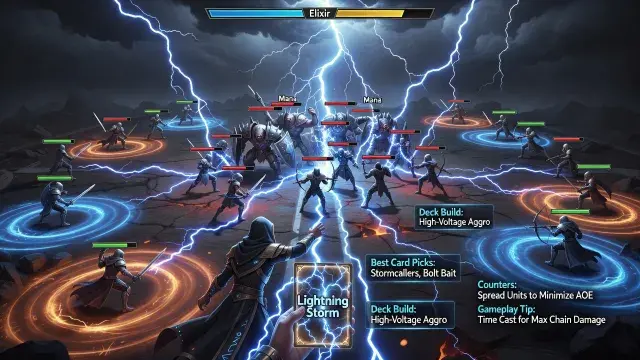
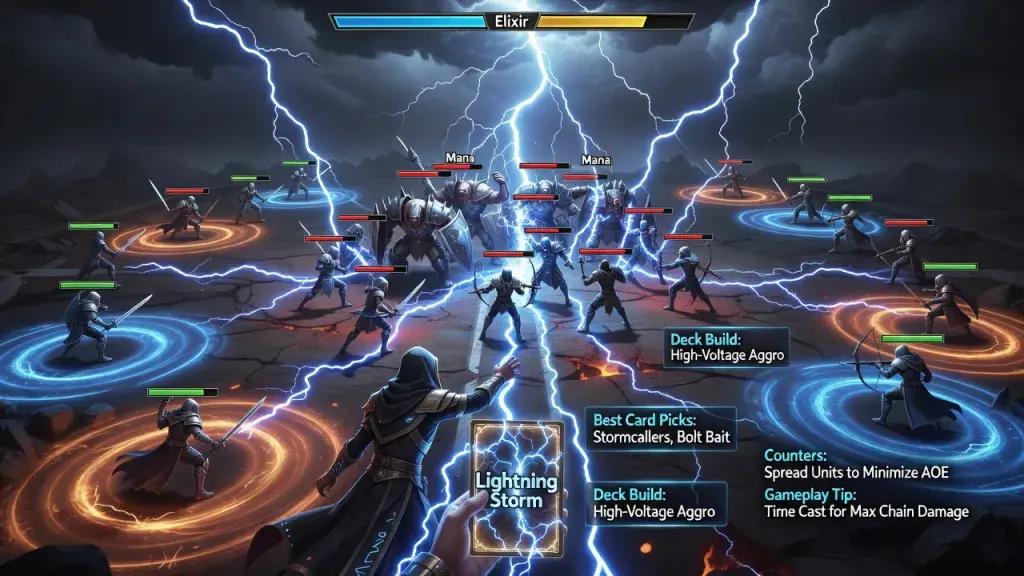
A single well-timed Lightning Storm can erase three units, reset a lane's momentum, and flip a match that looked lost thirty seconds earlier. That kind of swing power is rare, and it's exactly why players who understand this card's timing windows tend to win far more consistently than those who just throw it out reactively. The difference between a wasted play and a match-winning one usually comes down to a handful of decisions made before the card even hits the field.
This guide breaks down everything competitive players need to know: which cards actually synergize with the storm effect, how to structure a deck around it rather than bolting it on as an afterthought, and which counters will punish you if your timing slips. Along the way, we'll look at positioning habits, common mistakes, and the kind of reads that separate intermediate players from the ones climbing the ranked ladder. If you're still getting comfortable with the basics, a solid breakdown on how to play lightning storm is worth reviewing before diving into the finer strategic points covered here. Everything from here forward assumes you already know the fundamentals and want to sharpen your edge.
Understanding Lightning Storm: Core Mechanics and Timing
What Makes the Card Unique
Lightning Storm distinguishes itself through delayed, wide-area impact rather than instant single-target damage. That delay is the entire strategic crux of the card. It punishes clustering, rewards patience, and forces opponents to make split-second decisions about whether to commit units to a contested space or hold back and wait it out.
Reading the Optimal Cast Window
Casting early telegraphs your intent and gives sharp opponents time to scatter their units. Casting too late means the damage window closes before it matters. The best players wait until enemy units are mid-animation on an attack or ability - moments when repositioning isn't an option - before committing to the storm.
Damage Falloff and Positioning Zones
The effect isn't uniform across its radius. Units at the center of the storm take full damage, while those at the edge often survive with a sliver of health. Recognizing these zones changes how you play the card: a lightning storm strategy built around edge-clipping to soften units for a follow-up hit is very different from one built around outright kills.
Best Cards for Lightning Storm Synergy
Follow-Up Finishers
Cards with fast, low-cost attacks pair naturally with the storm's damage output. Because the storm often leaves survivors at critically low health, a cheap finisher can convert a near-wipe into a total clear without spending significant additional resources.
Bait and Distraction Units
Some of the best cards for lightning storm aren't damage dealers at all - they're units designed to draw enemy forces into a cluster. A tanky unit that absorbs attention naturally pulls opposing units into tight formation, setting up the exact conditions the storm punishes hardest.
Chip-Damage Support
Units that apply steady, low-cost pressure work well alongside the storm because they keep opponents on the back foot before the big swing arrives. This reduces the number of resources they have available to respond once the storm lands.
- Fast melee units for immediate follow-up kills
- Tank or bait units to encourage clustering
- Ranged chip-damage units to soften targets pre-storm
- Cheap swarm units that bait area splash before the real threat arrives
Building a Deck Around Lightning Storm
Core Deck Philosophy
A lightning storm deck build works best when every card earns its slot by either setting up the storm, cleaning up after it, or protecting you while you wait for the right moment to cast it. Random inclusion of strong cards without regard for synergy tends to produce a deck that's powerful in isolation but clumsy in execution.
Balancing Offense and Defense
Because the storm often functions as a defensive tool - clearing swarms or countering pushes - your deck needs enough independent offensive pressure that you're not solely reliant on it. Pair it with win conditions that don't depend on the storm being available, so you're never forced into a bad trade just because your key card is on cooldown.
Resource Curve Considerations
Elixir or mana efficiency matters enormously here. The storm itself tends to sit on the pricier end, so the rest of your deck should skew toward cheaper, flexible cards that let you hold resources in reserve for the moment a storm becomes available.
Sample Build Framework
A workable structure includes one primary win condition, two support units for clustering or chip damage, a defensive anchor unit, and one or two cheap spells for finishing low-health survivors. This framework keeps the deck flexible without overloading it with situational cards.
How to Counter Lightning Storm
Spreading Formation Tactics
The single most effective way to counter lightning storm is refusing to give it a worthwhile target. Spacing units out, even at the cost of slightly weaker synchronized attacks, denies the storm the density it needs to be efficient.
Baiting the Cast Early
Skilled players sometimes intentionally send in a low-value unit to provoke an early storm cast, burning the opponent's resource before a real push begins. This works because most players cast reactively rather than predictively, and a tempting cluster is hard to resist.
Health-Threshold Awareness
Knowing the storm's typical damage output lets you calculate whether your units will survive a hit. If your units sit just above the damage threshold, you can commit to trades you'd otherwise avoid, since you know the storm alone won't be enough to wipe them.
Lightning Storm Gameplay Tips for Competitive Play
Reading Opponent Elixir or Resource Count
Before committing to a storm, check whether the opponent has enough resources to immediately punish you for the trade. A storm cast into an empty board, or against an opponent who can instantly counter-push, often does more harm than good.
Mind Games and Predictive Casting
Advanced players don't just react to clusters - they anticipate them. If you know an opponent tends to group units for a coordinated push, casting the storm a beat before that push forms can catch them completely off guard.
Avoiding Common Overcommitment Mistakes
The most frequent error is casting the storm on marginal value - clipping one or two low-cost units when holding the card would have secured a much bigger payoff later. Patience is often the deciding factor between a mediocre player and a genuinely dangerous one.
- Track opponent resource count before committing
- Wait for clustering rather than forcing it
- Hold the card in defensive-heavy matchups until a real threat appears
- Avoid casting on units already below the damage threshold for a kill
Frequently Asked Questions
Is Lightning Storm better used offensively or defensively?
It leans defensive by nature since it thrives on punishing clustered enemy pushes, but skilled players use it offensively too, especially to soften a defensive formation before committing a heavier attack. The right choice depends on your deck's overall win condition and how much independent offense you already have.
What's the biggest mistake new players make with this card?
Casting it too early on low-value targets. New players often panic when they see two or three units grouped up, without checking whether the trade is actually worth the resource cost.
Can Lightning Storm single-handedly win a match?
Rarely on its own, but a perfectly timed cast against a fully committed push can swing momentum so heavily that it effectively decides the outcome. Its value comes from tempo and resource denial as much as raw damage.
How do I know if my deck has good synergy with this card?
Check whether your other units naturally encourage enemy clustering or benefit from finishing off weakened survivors. If your deck's win condition works independently of the storm, that's a strong sign of a balanced build rather than one over-reliant on a single card.
What's the fastest way to bait an opponent's storm out of their hand?
Send in two or three cheap units together in a tight formation without any real follow-up plan. Many opponents can't resist punishing an apparent cluster, even when the actual value is low.
Does unit spacing really make a measurable difference against this card?
Yes. Even a small increase in spacing can push units to the edge of the storm's radius, where damage falls off significantly. Consistently spread formations are one of the most reliable defensive habits a player can develop.